
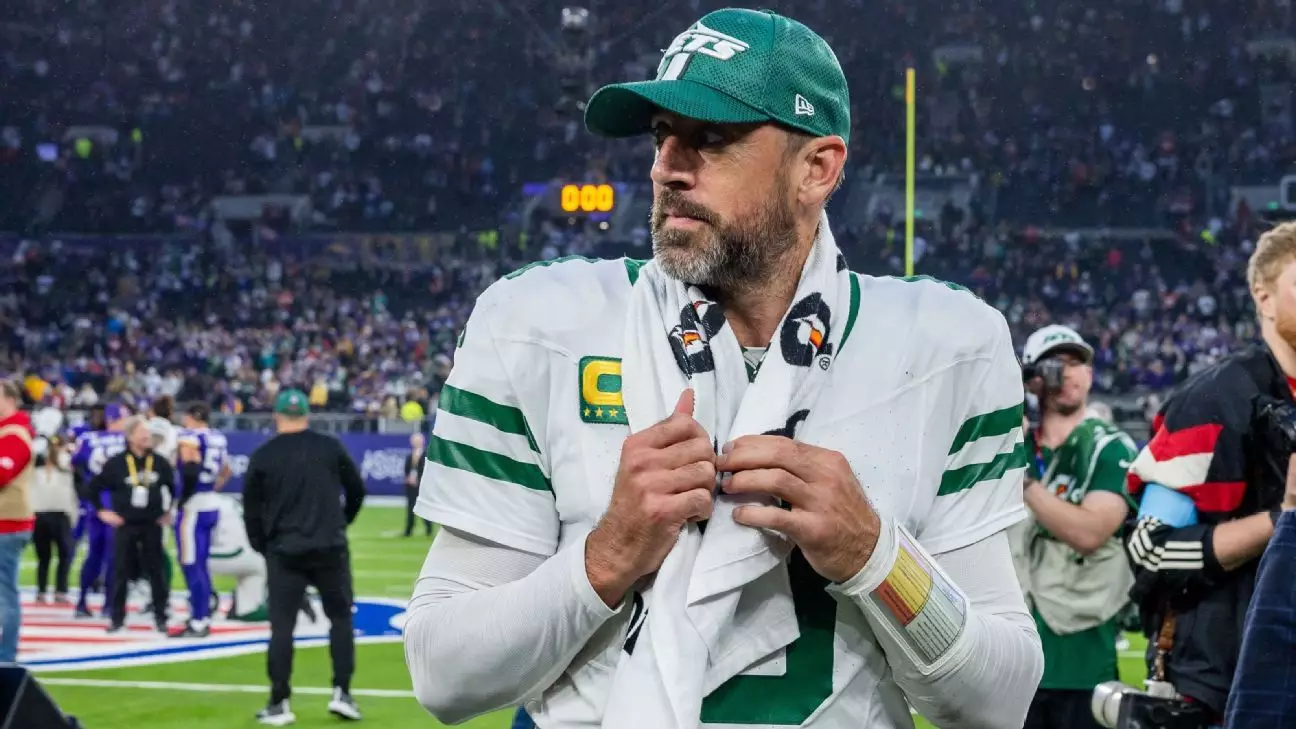
The New York Jets have made headlines recently due to the dismissal of head coach Robert Saleh after just five games in the 2023 NFL season. The move has incited various reactions within the organization and the media, raising questions about accountability, influence, and the paths ahead for both the players and the interim coaching staff. At the heart of this narrative is quarterback Aaron Rodgers, who has been both a focal point of speculation and a voice of reason amidst the turmoil.
In the wake of Saleh’s firing, one of the most controversial discussions has centered around the role of Aaron Rodgers in the decision-making process. Accusations suggesting that Rodgers influenced owner Woody Johnson’s decision were quickly shut down by the quarterback himself. During an appearance on “The Pat McAfee Show,” Rodgers firmly stated his discontent with these “ridiculous allegations,” asserting that he has minimal influence over team operations. While he expressed his support for Saleh and regret over the coach’s departure, he also has pledged to back interim coach Jeff Ulbrich, who is tasked with leading the team for the remainder of the season.
The dynamics within the Jets have been further complicated by the fact that Saleh was contemplating changes to his coaching staff, including a potential demotion for Nathaniel Hackett—Rodgers’ close friend and the offensive coordinator. This decision, which was reportedly in the works before Saleh’s termination, adds layers to the existing narrative of Rodgers’ loyalties and influence. Players have indicated there was shock within the locker room regarding the firing, reflecting a growing concern about accountability and leadership within the organization.
The emotional ramifications of Saleh’s firing have resonated throughout the Jets’ locker room. Key players, including tight end Tyler Conklin and linebacker C.J. Mosley, have spoken about their disbelief regarding the abrupt decision. Conklin emphasized that no player believed Rodgers had any role in the firing, highlighting a deep-seated respect for Saleh, who had been instrumental in shaping the team’s identity since his arrival.
During a players-only meeting after the announcement, Rodgers took the opportunity to stress the importance of accountability, reinforcing the message that the team must collectively bear the responsibility for their performance, rather than pinning the blame on the coaching staff. It’s evident that the players, while shocked, have taken this opportunity to reflect on their responsibilities as they aim to turn the season around.
In a clear statement of ownership, Woody Johnson publicly asserted that he alone made the decision to fire Saleh, indicating that he did not consult with Rodgers or anyone else in the organization prior to his choice. This lack of consultation further emphasizes a divide between the players and management, potentially breeding a sentiment of disconnect. Observers have noted that the relationship between Johnson, Rodgers, and Saleh has been closely examined throughout the season, especially when considering past tensions, such as the fine imposed on Rodgers for skipping a mandatory minicamp.
Rodgers has maintained that he has a strong relationship with Saleh, describing it as “solid.” Despite the undercurrents of speculation, he insists that he hasn’t felt the need to defend himself against narratives suggesting that he may have wielded undue influence. This commitment to steer clear of drama could play a vital role as the Jets navigate this challenging transitional phase.
As the Jets prepare to face the Buffalo Bills in an important divisional matchup, the possibility of navigating forward with a new coaching structure looms large. The players’ sentiments suggest a need for unity amidst the uncertainty. The dysfunctions displayed in earlier games have magnified demands for improvement, which now fall on Ulbrich and the remaining staff to implement.
The firing of Saleh marks a pivotal moment for the organization, representing not only the stakes of this season but also the complexities of team dynamics and accountability. As the Jets embark on a new chapter, their ability to rally together and focus on execution rather than internal strife will ultimately define their season.
In light of their previous struggles, the players must reaffirm their commitment to one another and channel the collective emotions surrounding Saleh’s departure into positive action on the field. If they can do that, perhaps they can not only honor their former coach but also find a way to adhere to the expectations that come with playing in a high-stakes environment in the NFL.